
Digital Predictions 2026: Media, Personal Brands, AI & Digital Wellness
The Digital Wellness Advantage (Ep #13)
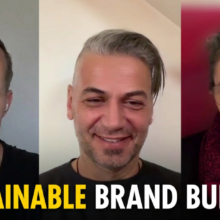
In this roundtable episode of The Digital Wellness Advantage, recorded in November 2025 and released in January 2026, D-Studio co-founders Matej and Paul, together with media-buying specialist and partner Andrej Volčanšek, share their digital predictions for 2026.
Setting the Scene
The Digital Wellness Advantage is here to help marketing executives build sustainable brands without burning out. As Matej explains at the beginning, the show explores how applying wellness-first thinking to digital strategy and executive routines leads to clearer decisions, stronger teams and better business outcomes.
In this episode, recorded in November 2025 and published in January 2026, the original trio comes back together:
- Matej Železnik
- Paul Mario Vratusha
- Andrej Volčanšek
Their intention is to have the courage to put digital predictions for 2026 on the table. Not as absolute forecasts, but as realistic possibilities, based on what they have seen change over the last 20–30 years in digital, media, business and personal branding.
They focus on three main questions:
- How will media and attribution evolve during 2026?
- How will personal brands and corporate brands interact?
- How will AI and LLMs shape both opportunity and digital wellness for leaders?
Meet the Partners
- Matej Železnik – CEO & Partner
Matej comes from a medical background. A bit less than 20 years ago he discovered the digital world, first through e-commerce, which was already part of his previous professional life. Together with Paul, he built a number of e-commerce shops around Europe and later exited. From there, he moved into helping individual brands who needed support and wanted to avoid the same mistakes. For more than 10 years now, the backbone of that work has become D-Studio Consulting, focusing mainly on digital strategy and finding clarity in what can easily feel like digital chaos.
- Andrej Volčanšek – D-Studio media-buying specialist
For around the last 20 years, Andrej has been deeply engaged in digital marketing. Digital media and numbers have been his “bread and butter”: performance marketing, analytics and investing digital media budgets for various brands. He has lived through cycles of change in transparency, analytics, performance thinking and platform dominance. In this episode, he brings a grounded view on where media buying is likely heading over the course of 2026.
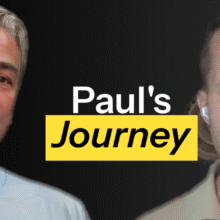
- Paul Vratusha – Director & Partner
Paul’s background spans property development, working with rural and urban real estate, catering, fashion, filming and theatre. Personal branding has been part of his journey for around 46 years. In the conversation, he connects that long-term experience with today’s reality: the importance of personal branding in small, medium and large companies, the influence of younger generations and the impact of AI.
Together, the three partners explore how media, personal brands, AI and digital wellness might play out during 2026.
Key Takeaways
- Media will diversify again in 2026. Expect movement away from relying only on Google and Meta, with more structured media plans and new networks supported by AI tools.
- Attribution will remain difficult. With cookies restricted and each platform claiming credit, experienced marketers will still need to combine data with gut feeling.
- Personal and corporate brands will move closer together. More money will flow into personal branding, while larger structures look for ways to integrate successful personal brands.
- AI and LLMs will widen the gap between consumers and power users. A small group will use assistants and agent swarms deeply, while most people remain more passive consumers.
- Digital wellness will be a real strategic factor in 2026. In a landscape of more speed, fear and competition, protecting mental energy and focus becomes its own competitive advantage.
Watch the Full Conversation on Digital Predictions 2026
Media in 2026: Back to Media Plans, Forward with AI
When Matej asks Andrej where digital media is heading, Andrej looks at what has changed over the last 15-20 years and what is likely to change during 2026.
For a long time, digital media discussions have been dominated by:
- transparency and analytics
- performance thinking – “one euro in, ten out”
- instant results and dashboards
At the same time, one of Andrej’s biggest lessons from performance marketing is that nothing beats product availability and placement. In his words, one of the most important things in digital marketing is making sure that:
- your products are there,
- they are visible,
- people can find information about them,
- and this is true on more than just one or two platforms.
Looking ahead through 2026, Andrej expects:
- A shift away from only Google and Meta
He believes we will see something new, not just the same “twin” of Google and Meta controlling everything. New networks and forms of media will open additional space for brands. - Return of classic media planning
He predicts a reintroduction of media plans: drafted “the good old way” – pre-flight, post-flight, with clear analysis. Clients will again say, “Here is our budget, make sure you reach as many people as possible in this geography or cohort, and diversify the spend.” - New AI tools for media buying
A lot of AI media-buying solutions are being rolled out. Andrej sees a chance that AI can finally help brands buy media more effectively online beyond two platforms: reaching a big enough population when a brand has a decent media budget.
At the same time, he highlights the attribution problem, especially in Europe:
- The cookie situation has made things “mega hard.”
- Platforms like Google naturally attribute campaign outcomes to themselves.
- Analytics tend to point towards “spend more on this platform.”
Because true cross-platform attribution is still not solved, experienced marketers have to rely partly on gut feeling. They know certain things make sense for the business even if analytics say otherwise.
By the end of 2026, Andrej expects to see:
- media plans used again as a central tool,
- brands diversifying their spend more seriously,
- and AI helping media buying move closer to the structure and clarity of classic media, but for the digital environment.
Personal Brands in a Tighter System
From media, Matej moves to branding and personal branding.
Paul’s prediction for 2026 is clear: there will be more personal brands than ever before, more money going into them and more possibilities than before. But also more competition and pressure.
He looks at his grandson (20) and granddaughter (16) and their friends. They are not naive. They live in tightly structured systems and constantly ask:
- not only “What can I do?”
- but “What’s in it for me?”
Over the next years, they will move into their mid-twenties and become key performers in the economy. Media and branding strategies prepared in early 2026 will already be thinking about them.
Paul expects that:
- AI agents and pre-research will be heavily used to understand these younger generations – their thought patterns, movement patterns and what they really desire and will consume.
- Media plans will be designed with this research in mind, if that is not already happening at scale.
- Personal and corporate branding will come closer together. As soon as a personal brand takes off, larger companies can benefit from that success. They have the resources, speed and experts to support, connect or acquire that brand.
He also mentions that fiscal policy and taxation in bigger countries have already changed, with smaller countries following. Things are being tightened not only digitally but also on the fiscal side. That influences how people can express themselves and build their personal brands.
Andrej adds that for personal brands, “you can only do so much on Instagram.” People are getting tired of scrolling on the same two to four platforms. He imagines:
- some kind of multi-dimensional mesh where you can send your personal brand or message,
- tools that make sure you reach the people you need to reach,
- and options to reach very large audiences online (the “big Kahuna” effect, like a Super Bowl moment).
He believes there must be better spaces for people to do work and life online than just hoping for a one-second scroll stop in a crowded feed.
Paul agrees that there will be new forms of media open for meaningful ideas and personal brands that want more than superficial reach. But he also underlines that:
- the larger part of media will still chase more money, more speed, more hits,
- much of the acceleration will continue in less meaningful arenas,
- there will be a lot of clutter.
The big question for 2026 is whether individuals and brands who are looking for something truly valuable will be able to siphon out that value and communicate it, or whether they will get pulled into generic, mass-level competition.
AI, LLMs and the Future of Digital Wellness
Matej then brings the conversation directly to AI, LLMs and wellness.
From his point of view as a practitioner, LLMs are a bigger disruptor than the internet – closer to electricity. Before LLMs developed some form of artificial or synthetic reasoning, most of us were simply “playing” with AI and asking what it might do. Now, the impact is becoming more tangible.
He explains a key difference:
- Classical systems and software are deterministic. One plus one is always two.
- LLMs are not deterministic. With the same prompt, you never get exactly the same output.
- You can give an LLM a knowledge base, block internet access, super-prompt it and make it more focused – but it still won’t behave like a fixed formula.
For Matej, that is what makes LLMs such a big shift.
He openly says he doesn’t see himself as an AI expert but as a practitioner who wants to see what is actually useful. Over the last year, that has been his objective: finding real, practical use cases rather than just talking about the technology.
His prediction for 2026 is:
- We will see the rise of personal assistants, especially those focused on specific business cases that support real work.
- We will see swarms of agents, orchestrated agents that collaborate on tasks.
He expects that a small number of younger power users, who were around 16-17 when this technology appeared, will be especially strong in using these tools. They will not carry the same “burden” of old digital habits and gatekeepers. In small teams of two or three people, they will use assistants and agent swarms to build powerful companies.
Most people, however, will remain consumers of AI. That is where the trap lies: if we only consume and never actively design how we use these tools, we risk being pulled into more noise instead of more clarity.
For digital wellness, Matej asks again: do any of us truly enjoy spending hours in front of a computer entering data into spreadsheets? Most of us do not. LLMs and agents can finally disrupt that status quo and reduce this cognitive load.
From Individual Wellness to Collective Wellness
Paul then connects AI to collective wellness.
He suggests that if we took:
- LLMs,
- the scientific knowledge already available,
- and a bit of academic or private investment,
and applied them seriously to an area like wave or tidal energy, we could produce cheap energy for the planet. He uses the example of societies that have used crude oil wealth to show that:
- there is no absolute need for everyone to pay high taxes,
- there is no absolute need for an eight-hour working day,
- it is possible to have functioning societies with different models.
He notes that many ships, planes and buses are already running on hydrogen, and that hydrogen should really be a form of free or very cheap energy.
From this perspective, he asks what would happen if media and digital channels were used more to promote and support this kind of thinking, instead of mainly pushing more buying, more selling and constant competition between personal brands and corporates.
Matej responds that, just like any tool, AI and LLMs are a double-edged sword. They can be used for meaningful projects and solutions – or for intensifying the current race. As he says, “this sword is even sharper now.”
That is why bringing wellness-first thinking into AI, media and branding is not just an abstract idea but a practical need.
Predictions and Hopes for 2026
To wrap up the conversation, recorded in November and now published in January 2026, each of them shares both predictions and hopes for the year:
- Paul predicts that 2026 will bring more fierce competition, more fear and more chaos than previous years. As long as the existing formula continues, the fear of not being able to perform or belong will keep accelerating competition. He hopes that dissatisfied and disillusioned people, especially younger generations, will be given space to express how they see things.
- Andrej expects that the social structure of the world will not suddenly change in 2026. Power will still be concentrated, and big players will keep encapsulating their power and technology in privately-owned digital systems. But he hopes that 2026 will bring new tools and ways for individuals to use digital technology meaningfully, especially as money and value change.
- All three hope that the internet remains a tool, not a “life form” for most people. They would like to see more people engaging with content and tools in a meaningful way, as part of their lives, not as a replacement for their lives.
They also agree that:
- we will probably still be buying and selling via web stores,
- booking trips online,
- and paying with some form of digital system.
But 2026 may also show early introductions to new ideas and systems that become more visible in 2027 and 2028.
Ready to Level Up?
As you move through 2026 as a marketing executive or founder, it is worth asking:
- Where am I over-dependent on only one or two platforms for media and visibility?
- How can I use AI and LLMs to reduce manual, draining work instead of adding more noise to my day?
- What would a wellness-first digital strategy look like for my team over the next 12–24 months?
Follow & Stay Updated
Follow us for more:
- Subscribe to The Digital Wellness Advantage for more grounded, strategy-rich episodes.
- YouTube: D-Studio Consulting on YouTube
- Spotify: D-Studio Consulting on Spotify
Want support in building a digital brand that can handle 2026 without burning you out? Contact us today!